
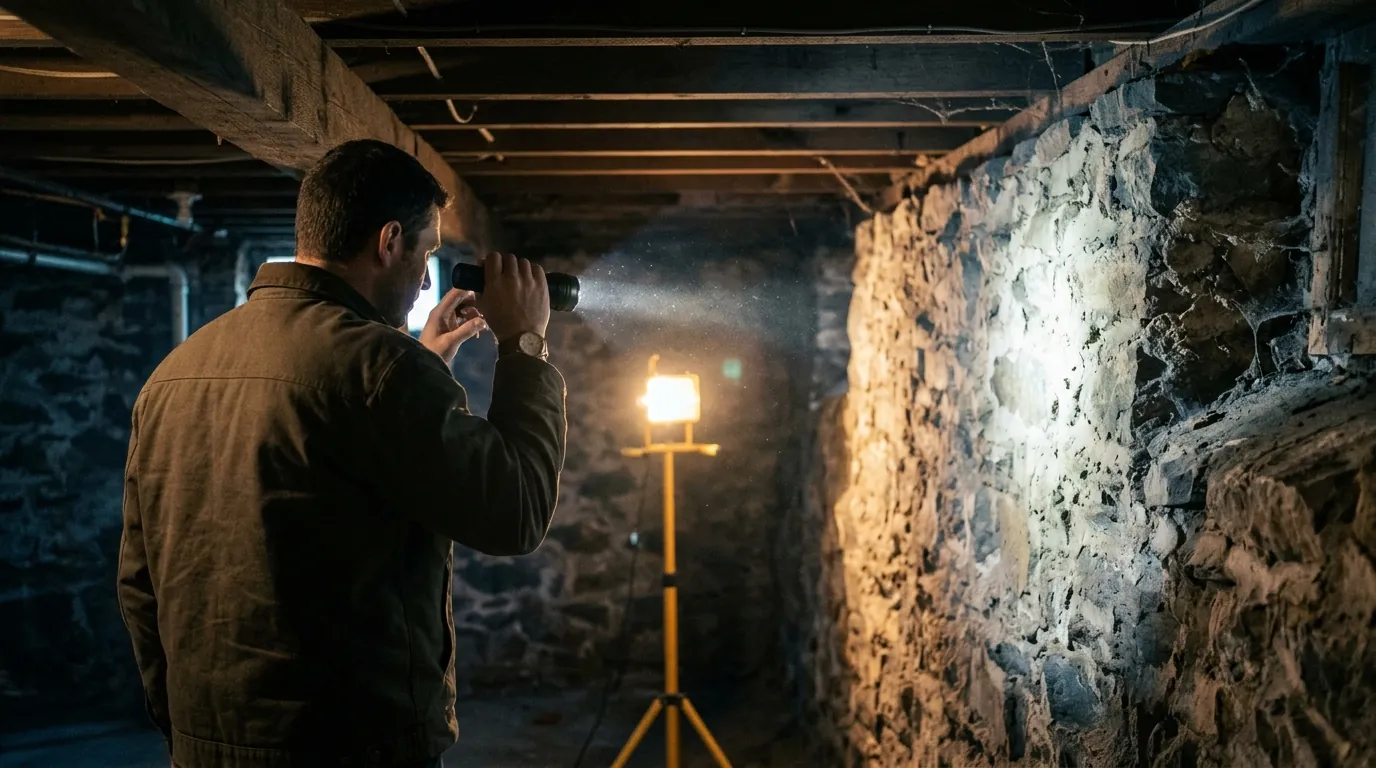
Inspecting an Older Home
Most homes in this valley are old. Census figures for 2020 to 2024 show about 52% of Scranton’s homes and 47% of Wilkes-Barre’s were built in 1939 or earlier. An inspection here should go beyond the basics: the foundation (often stone), wiring age, any old heating oil tank, lead paint in homes built before 1978, a radon test, and whether the address sits over old mines.
None of that is a reason to pass on an old house. It’s a reason to inspect it properly and know what you’re buying.
How Old the Houses Really Are
| Place | Homes built 1939 or earlier | Homes built before 1950 |
|---|---|---|
| Scranton (city) | 52% | 62% |
| Wilkes-Barre (city) | 47% | 58% |
| Lackawanna County | 36% | 46% |
| Luzerne County | 30% | 39% |
Source: U.S. Census Bureau, American Community Survey 2020 to 2024 five-year estimates, table B25034 (year structure built), via Census Reporter, read November 13, 2026. Shares are of all housing units.
That’s a lot of hundred-year-old houses. Many have been rewired, re-roofed and re-plumbed at least once. Some haven’t. The inspection tells you which kind you’re looking at.
Start With a General Home Inspection
Book it the day your agreement of sale is signed. Your inspection window is short, and specialists often come out only after the general inspector flags something.
A general inspector looks at the structure, roof, water management, heating, plumbing, electrical, attic, basement and visible condition of everything else. On an older home, ask yours three questions up front:
- How many homes this age do you inspect?
- Will you note anything that needs a specialist, and which kind?
- Can I walk through it with you, or join by video?
Then go to the basement with them. Most of the story of an old house is down there.
What Turns Up Most in Older NEPA Homes
Stone and Block Foundations
A lot of older homes here sit on stone foundations, or on a mix of stone, brick and later block. A dry, solid stone foundation can outlast all of us. The things to watch are water coming in, loose or missing mortar, bowing walls and any sign of recent movement. If the inspector sees active movement, a structural engineer is worth the fee before you go further.
Movement can have a lot of causes. In this valley one of them is mine subsidence, so check the address on DEP’s map as well. See mine subsidence insurance.
Wiring From Another Era
Homes built in the early 1900s were often wired with knob and tube, two separate wires run on porcelain insulators. Plenty of it was removed decades ago. Some is still in use, and some is still live behind walls that were updated later. Ask your inspector to note any they can see, and ask the seller what’s been rewired and when. If you find it, get an electrician’s opinion and call your insurance agent before closing, because some insurers ask about it when they write a policy.
Also worth a look: the size of the electrical service, the age and brand of the panel, and whether there are enough grounded outlets for how people live now.
Heating Oil Tanks, Above Ground and Buried
Older homes that once burned oil may still have a tank in the basement, or one buried in the yard. Some homes converted to gas and left the old tank behind.
The Pennsylvania Department of Environmental Protection’s guidance for homeowners makes three points worth knowing as a buyer:
- Leaking heating oil tanks can contaminate drinking water and soil, and the cleanup is often not covered by typical homeowners insurance.
- A freshly painted tank doesn’t mean it’s sound. Tanks can rust from the inside out.
- When a tank is removed, the fill pipe has to come out or be sealed, because oil has been delivered into basements through fill pipes for tanks that were already gone.
If you see a fill pipe or vent pipe outside with no tank in sight, ask. A tank sweep can find a buried tank. If one is there, talk about removal and soil testing before closing, and see whether the state’s underground heating oil tank cleanup reimbursement program applies.
DEP: Residential home heating oil · DEP: Tips for heating oil tank owners
Lead-Based Paint
Lead paint for homes was banned in the U.S. in 1978, but the EPA says it’s still in millions of homes. It’s usually not a hazard while it’s in good shape. Peeling, chipping and cracking paint is the problem, and so is sanding or scraping it during a renovation.
For a home built before 1978, federal law requires the seller to give you the lead disclosure, the EPA pamphlet “Protect Your Family From Lead in Your Home,” and a 10-day window to have the home tested for lead-based paint. You can agree in writing to shorten, lengthen or waive that window. If you have young children or plan to renovate, use it.
EPA: Real estate disclosures about lead
Radon
This is the one every buyer in Pennsylvania should test for, old house or new. Radon is an invisible, odorless radioactive gas that comes up from the ground, and PA DEP calls it the second leading cause of lung cancer. DEP says Pennsylvania has one of the most serious radon problems in the country: about 40% of homes tested here are above the EPA’s action level of 4 picocuries per liter (pCi/L).
What to know as a buyer:
- Testing is the only way to know. DEP says a home test kit costs about $20 to $30, or you can hire a state-certified testing company. In a purchase, a state-certified tester gives you a documented result that both sides can rely on.
- If a result is 4 pCi/L or higher, DEP recommends confirming it and then reducing it. DEP puts a typical mitigation system at $800 to $1,200, installed in less than a day.
- If the house already has a system, ask for the most recent post-mitigation test. DEP suggests retesting every two years.
DEP: Radon in the home · DEP Radon Hotline: (800) 237-2366
The Rest of the List
These come up often enough in houses this age that they’re worth asking about:
- Sewer lateral. The pipe from the house to the street main is often as old as the house. A camera scope is inexpensive next to replacing one.
- Chimneys. Older chimneys may be unlined or have a damaged liner, especially if the heating system was changed. A chimney sweep can scope it.
- Old pipe and duct insulation, and old flooring. Some of it may contain asbestos. Don’t disturb it. Have it tested if you plan to renovate.
- Galvanized or mixed plumbing. Older steel water lines can narrow inside over time. Ask what’s been replaced.
- Roof and gutters. On an old house, water management matters more than anything else on this list.
- Porches and steps. Wood porches take a beating in our winters.
What to Do With What You Find
An inspection report on a hundred-year-old house will be long. That’s normal. Sort it into three piles:
- Safety and structure: active leaks, structural movement, unsafe wiring, high radon, a leaking tank. These are worth a repair request, a credit or walking away.
- Things that need doing in the next year or two: an aging roof, an old water heater, worn windows. Budget for them.
- Things that are just old: wavy glass, uneven floors that have been uneven since 1925, plaster cracks. Part of the deal.
If the house needs real work, PHFA has loans that roll repair money into the purchase. The Keystone Home Loan allows $1,000 to $15,000 for repairs, and Keystone Flex Purchase and Improvement allows up to $30,000, as of November 2026. Details are on the PA first-time buyer programs page.
Frequently Asked Questions
Should I get a radon test when buying a house in PA?
Yes. PA DEP says about 40% of Pennsylvania homes tested are above the EPA action level of 4 pCi/L, and testing is the only way to know. In a purchase, hire a state-certified tester during your inspection period. If the result is high, DEP puts a typical mitigation system at $800 to $1,200.
Is knob and tube wiring a deal breaker?
Not automatically. It’s common in homes built in the early 1900s, and much of it has been replaced. Find out how much is still in use, get an electrician’s assessment and a cost to replace it, and check with your insurance agent before closing, since some insurers ask about it.
How do I know if an old house has a buried oil tank?
Look for a fill pipe or vent pipe outside with no visible tank, ask the seller about past heating systems, and hire a tank sweep if there’s any doubt. PA DEP warns that leaking tanks can be expensive to clean up and that typical homeowners insurance often doesn’t cover it.
Do I have to test for lead paint in an older home?
You don’t have to, but you have the right to. For homes built before 1978, federal law gives buyers a 10-day window to test for lead-based paint, which you can shorten, extend or waive in writing. The seller must also disclose any known lead paint and give you the EPA pamphlet.
Are older homes in Scranton worth buying?
Many are. About half of Scranton’s homes were built in 1939 or earlier, so older homes make up much of what you’ll see. A thorough inspection, a radon test and a mine subsidence check tell you whether a particular house is a good one. Budget for some early repairs.
Looking at an Older House?
I’ll walk the basement with you. I can’t replace your inspector, and I won’t try, but I can help you decide which findings are worth a repair request and which are just an old house being an old house.

Ready to Talk?
Call or text me at (570) 905-4300, or send me a note. For neighborhood-by-neighborhood prices, see Scranton neighborhoods and the Scranton and Wilkes-Barre town pages. If you’re looking at a two-family, read double block homes too, and if this is your first home, start with the first-time buyer guide.